
Can Figure Skaters Really Teach Hockey Players?
Continued
There are certainly elements that are common to both figure skating and skating for hockey. With those elements that are common; I would not at all suggest that a person trained in the discipline of figure skating cannot help a hockey player. The difficulty is that there are vast differences in the skating requirements for each.
Let Me Try To Explain Some Elements Of
Figure Skating
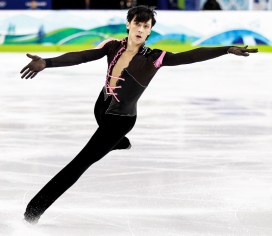 Figure skating has specific elements that differ from the skating requirements in hockey as a result of some very distinct and different objectives.
Figure skaters are putting on a show. They need to please the judges to achieve high marks in order to win a competition. Body lines are extremely important. The position of the head, the arms and extension of the leg to produce these lines create a different body position and attitude for skating.
In modern-day figure skating winning relies on spectacular jumps. Figure skaters are extraordinary athletes and if you ever watch a live performance you’ll be amazed at the impressive heights achieved in these jumps. Out of necessity, the figure skating boot comes high over the ankle with a lot of support to withstand the forces of landing a jump. Also, If you ever watch a figure skating exhibition you’ll also notice the big jumps are done usually from skating backwards.
In addition, the blades on figure skates have “picks” on the front to assist with digging into the ice primarily to assist with jumps.
On the Other Hand
Forget for a moment of the challenges of dealing with a stick and a puck, which I covered in a previous blog.
Hockey players are not putting on a show or display in any sense as described above when done by a figure skater in competition.
 Hockey players do not do jumps. A hockey player not only wants, but needs to have his blades in contact with the ice to the maximum possible in order react to changes in action that occur in fractions of seconds. A hockey player doesn’t want to jump and leave contact with the ice unless it’s some kind of panic protective situation. Think about it; without contact with the ice you essentially have no control until you are back in contact with the ice. One very important point in teaching effective skating for hockey is maximizing contact with the blades on the ice; in other words, minimizing the time a skate blade is not in contact with the ice.
A hockey player is frequently making very quick and quite violent changes in direction in response to unscripted and ever-changing situations These reactions need to made in very small fractions of seconds. The key to these quick reactions is the free movement of the ankle in a couple of different and very important ways. Without these movements, quick changes in direction that need to be made in a split second just won’t happen efficiently. In hockey this is what gives you the ability beat your opponent or avoid getting creamed.
To Get Technical For A Moment – But This Is Important
To be the best hockey player you can be, you need to under stand how the ankle needs to work and how to make these movements and how to apply them.
First there is flexion and extension of the ankle. Dorsilfexion is the movement that brings the top of the foot closer to the shin and planter flexion is the movement of that points the toe and takes the top of the foot farther away from the shin. This motion of the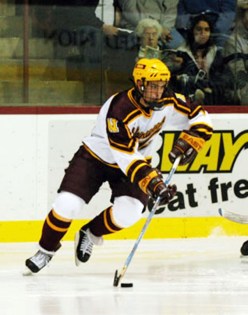 ankle is essential for a hockey player. By allowing dorsilflexion a player loads up the ankle with maximum energy for an explosive change in direction and it’s the final release of the ankle by plantar flexion that can make the difference between beating your opponent or not or getting creamed. You hear a lot of coaches yelling for players to bend their knees. Dorsilfextion can be accomplished by keeping your “rear-end”close to the ice which will create a maximum bend in the knee. (The problem is most coaches don’t quite know what they’re doing and how to explain things. I think I may have cover this in detail in the next blog … this is important.)
Second there is inversion and eversion or rolling of the ankle. Eversion is the rolling of the ankle that moves the bottom of the foot to point away from the center of the body and inversion is the rolling that creates the opposite. This is the movement of the ankle that allows a skater to “grab” the ice. Think of it this way; if you were on skates and pointed your feet straight ahead and then did a kind of walking motion where each foot moved straight from front to back, then you wouldn’t go anywhere. There would be no “grab” of the ice. You need to grab the ice by rolling the ankle to apply bite and grip into the ice to get the most out of your skating stride.
It’s the combination of these actions of the ankle that is critical to being a great skater and a successful hockey player.
So Here’s The Important Point
While both disciplines involve the wearing of skates and skating, the end goals and therefore the process to achieve those goals is different.
Once again, a big part of figure skating is a show with pleasing body lines and form as well as spectacular jumps. Therefor the boot is laced high for support and naturally restricts the movement of the ankle that is so important in hockey. I’m not saying it’s impossible for a trained figure skater to learn about how the ankle must move to be a great skater for hockey; I’m just don’t think they would get this from their training for figure skating. Also there is the fact that just knowing about something doesn’t mean you know how to teach it, but that’s a whole other topic to be cover later.
Time now to end this part for now (this became a little linger than expected).
I’d love to hear from some figure skaters that train hockey players and I’m always open to learn something new.
Can Figure Skaters Really Teach Hockey Players?
Note:
If you’re new to this blog and reading it from Facebook or Twitter, make sure to click on the BLOG/NEWS link in the menu at the top of the page and scroll down to read previous blogs on this and other subjects. Otherwise you won’t be able to get to previous blogs.
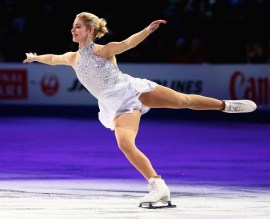 For certain, there are cross-over elements for these skating techniques; however I believe there are significant differences as well and there are specific reasons for these differences. The reason for the differences quite simply are a result of the end objective. In figure skating, the objective for the skater is to put on a great show in order to win a medal and win the competition. The movements must be pleasing to the eye, graceful and look effortless. This means that the “body lines” created during the performance are of tremendous importance. There are other elements of differences in these techniques and I will deal with those in the future, but for now this is the point I want to illustrate.
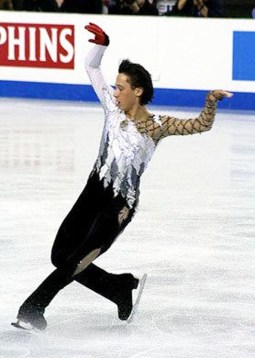 hockey and hopefully in the NHL. Believing that the best experience and development for Jimmy was to play in the GTHL; the biggest and most competitive minor hockey league in the world. Now Jimmy had initially started as a figure skater in his very early youth and the habits developed during that training were still evident when I watched him during our weekly team sessions.
 I recently read some newspaper articles about a lady named Dawn Braid, Braid was hired earlier this summer by the Arizona Coyotes, making her the NHL’s first full-time female coach.
 As written in a previous blog, the Richmond Hill – Vaughan hockey association arranged for an exhibition game with Druzhba 78. Now this exhibition game was played against a put together all-star team of players from Richmond Hill – Vaughan and their players were at least a year older than the Druzhba team. Also, the Druzhba team was in the middle of a tournament and had played earlier in the day. It was at the exhibition game that my sons were in awe and inspired by the skill of Anatoliy Buliga. The hockey association was selling memorabilia to raise money. We bought a hockey puck signed by Buliga and I still have the puck to this day.
 In prepping for the initial blog, I used the ‘Google Machine” to check the spelling of Buliga’s name. God bless the “Google Machine” because I came up with a number of links to sites for Anatoliy. It looked like he was still involved in hockey and was operating as a skills instructor. I found sites linked to hockey instruction in Europe however there were sites that were linked to hockey training near Detroit Michigan. The thought struck me right away that it would be great to talk to him and maybe get a chance to meet him. I tried calling phone numbers on some of the sites but they were no longer active.
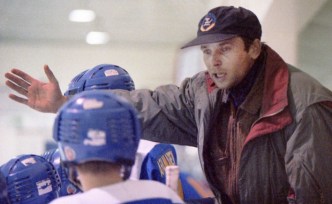 Word eventually came out that the coaching and training methods of Ivan Pravilov were not particularly “enlightened”. Carefully hidden from public view was the abusive methods of Pravilov.
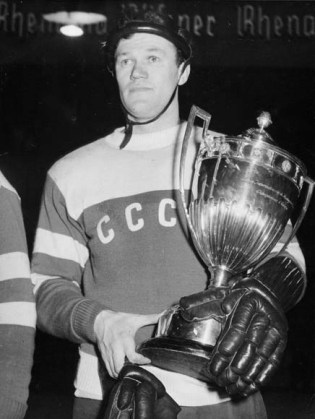 To accomplish this their focus was singular on winning gold medals. With that goal in mind they set out to do what ever it took to develop the most highly skilled hockey players as well as the most highly skilled trainers and coaches. They even included a comprehensive sports program into their school system with significant time and coaching resources devoted to this program. They went to the extent to have so-called experts put young students though a series of physical exercises and based on the evaluation of their performance the students were streamed into specific sporting activities in order that the students would be trained in those activities in which they could experience the best results.
 Mike Serba Memorial Golf Tournament