
Can Figure Skaters Really Teach Hockey Players?
Continued
In the first part of this series, I wondered about the ability of a person trained as a figure skater to teach a hockey player all of the elements necessary to be a great skater for hockey.
Now this has been going on for quite a while. There have been many (mostly female) figure skaters that run hockey schools and been hired by NHL teams and individual NHL players for skating instruction.
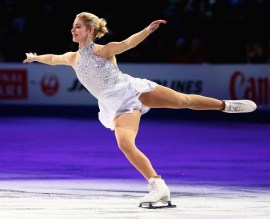 For certain, there are cross-over elements for these skating techniques; however I believe there are significant differences as well and there are specific reasons for these differences. The reason for the differences quite simply are a result of the end objective. In figure skating, the objective for the skater is to put on a great show in order to win a medal and win the competition. The movements must be pleasing to the eye, graceful and look effortless. This means that the “body lines” created during the performance are of tremendous importance. There are other elements of differences in these techniques and I will deal with those in the future, but for now this is the point I want to illustrate.
A Personal Experience That I Always Remember
Back when I was actively working for a hockey school here in Toronto, there was a player that I worked with during weekly team skills sessions. His name is Jimmie Lodge and he was born in Pennsylvania, but his family aspired for Jimmy to have a career in 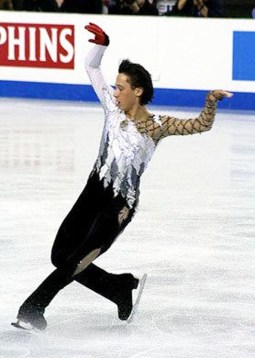 hockey and hopefully in the NHL. Believing that the best experience and development for Jimmy was to play in the GTHL; the biggest and most competitive minor hockey league in the world. Now Jimmy had initially started as a figure skater in his very early youth and the habits developed during that training were still evident when I watched him during our weekly team sessions.
I found one habit quite amusing. One thing we did a lot of was drills requiring quite hard and fast transitions and change of direction; something that is not normally a requirement in figure skating. So lets see if I can describe the difference adequately. In hockey if you are going to completely change direction quickly (in other words if you’re skating south to north and you want to stop as quickly as possible, change direction and go north to south) you would start with a typical 2 footed hockey stop. Say in doing this the stop is to the left side. In this 2 footed skating stop the skater would be using the outside edge on the left skate and the inside edge on the right skate. Just before coming to a complete stop the skater would lift the right foot and turn his body to the new direction. As the stop is completed the skater would push-off the outside edge of the left skate as the right foot hits the ice and be moving in the new direction as quickly and efficiently as possible. Now writing about this move and thinking about conveying it has been painful, but I hope I got it right.
Now good old Jimmy; because of his old figure skating habits would just use the outside edge of his left skate which is the way figure skaters frequently stop in the need for a showy presentation. I was certain Jimmy was always just a split second slower in these transitions because of this habit.
One More Example
I had occasion to be at a Toronto Maple Leafs a few years ago and there was a new feature that I hadn’t seen before. During a time-out break for a TV commercial they had a team of girls come out to clean the scraped up snow from the ice. I was amused at the obvious difference in the skating style of the girls. Some had clearly played hockey and others came from a figure skating back ground and the difference in style was obvious.
Watch the following film clip and I’m sure you’ll see the differences. It’s most clear at the beginning. Watch the row of girls closest to the camera and watch the first girl in the line. She skates like a hockey player. Notice the bend of the knee, the tilt of the upper body, the push to the side in the stride and the pretty clear weight shift form side to side. Now watch the 3rd girl in that line. Notice that she is more upright with less knee bend, less tilt of the upper body, more of a push to the rear to start each stride, and the straight point of the of the leg after finishing a stride to create a pleasing body line for show. This one is obviously a figure skater.
In Part 3 I’ll outline some of the cross-over similarities between figure skating and skating for hockey as well as some of the differences.
Note:
If you’re new to this blog and reading it from Facebook or Twitter, make sure to click on the BLOG/NEWS link in the menu at the top of the page and scroll down to read previous blogs on this and other subjects. Otherwise you won’t be able to get to previous blogs.
 I recently read some newspaper articles about a lady named Dawn Braid, Braid was hired earlier this summer by the Arizona Coyotes, making her the NHL’s first full-time female coach.
 As written in a previous blog, the Richmond Hill – Vaughan hockey association arranged for an exhibition game with Druzhba 78. Now this exhibition game was played against a put together all-star team of players from Richmond Hill – Vaughan and their players were at least a year older than the Druzhba team. Also, the Druzhba team was in the middle of a tournament and had played earlier in the day. It was at the exhibition game that my sons were in awe and inspired by the skill of Anatoliy Buliga. The hockey association was selling memorabilia to raise money. We bought a hockey puck signed by Buliga and I still have the puck to this day.
 In prepping for the initial blog, I used the ‘Google Machine” to check the spelling of Buliga’s name. God bless the “Google Machine” because I came up with a number of links to sites for Anatoliy. It looked like he was still involved in hockey and was operating as a skills instructor. I found sites linked to hockey instruction in Europe however there were sites that were linked to hockey training near Detroit Michigan. The thought struck me right away that it would be great to talk to him and maybe get a chance to meet him. I tried calling phone numbers on some of the sites but they were no longer active.
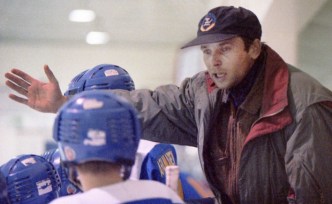 Word eventually came out that the coaching and training methods of Ivan Pravilov were not particularly “enlightened”. Carefully hidden from public view was the abusive methods of Pravilov.
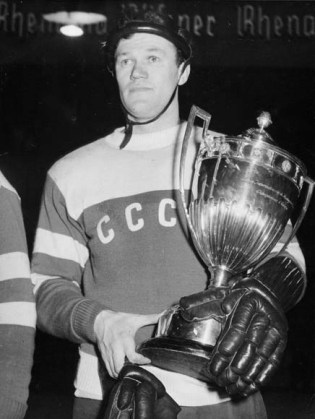 To accomplish this their focus was singular on winning gold medals. With that goal in mind they set out to do what ever it took to develop the most highly skilled hockey players as well as the most highly skilled trainers and coaches. They even included a comprehensive sports program into their school system with significant time and coaching resources devoted to this program. They went to the extent to have so-called experts put young students though a series of physical exercises and based on the evaluation of their performance the students were streamed into specific sporting activities in order that the students would be trained in those activities in which they could experience the best results.
 I cannot tell the parents and family of those who lost a loved one how to handle their loss and their grieving. I know what works for me, but all I can say is I hope they are all able to find whatever helps them deal with their loss.
 Mike Serba Memorial Golf Tournament