Mike Serba Memorial Golf Tournament

Remembering Mike Serba

  • Home
  • About Mike
    • Learn About Mike
    • Photos of Mike
    • Videos of Mike
    • Memories of Mike
    • The Gift of Life
  • Blog / News
  • For Kids Charities
  • Our Event
  • Sponsors
  • Photo Gallery

Can Figure Skaters Teach Hockey Players? – Part 3 – (XXIV)

Posted by Jim on September 5, 2018
Posted in: Hockey, hockey Skills, how to succeed in hockey, Jim Serba, mike serba, mike serba memorial golf tournament, Russian hockey skills, understanding hockey.

Can Figure Skaters Really Teach Hockey Players?

Continued

There are certainly elements that are common to both figure skating and skating for hockey. With those elements that are common; I would not at all suggest that a person trained in the discipline of figure skating cannot help a hockey player. The difficulty is that there are vast differences in the skating requirements for each.

Let Me Try To Explain Some Elements Of

Figure Skating
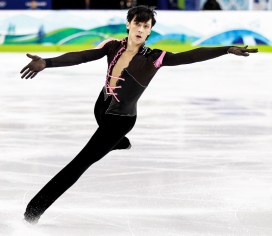
Figure skating has specific elements that differ from the skating requirements in hockey as a result of some very distinct and different objectives.

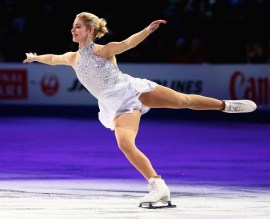
Figure skaters are putting on a show. They need to please the judges to achieve high marks in order to win a competition. Body lines are extremely important. The position of the head, the arms and extension of the leg to produce these lines create a different body position and attitude for skating.

In modern-day figure skating winning relies on spectacular jumps. Figure skaters are extraordinary athletes and if you ever watch a live performance you’ll be amazed at the impressive heights achieved in these jumps. Out of necessity, the figure skating boot comes high over the ankle with a lot of support to withstand the forces of landing a jump. Also, If you ever watch a figure skating exhibition you’ll also notice the big jumps are done usually from skating backwards.

In addition, the blades on figure skates have “picks” on the front to assist with digging into the ice primarily to assist with jumps.

On the Other Hand

Forget for a moment of the challenges of dealing with a stick and a puck, which I covered in a previous blog.

Hockey players are not putting on a show or display in any sense as described above when done by a figure skater in competition.

Hockey players do not do jumps. A hockey player not only wants, but needs to have his blades in contact with the ice to the maximum possible in order react to changes in action that occur in fractions of seconds. A hockey player doesn’t want to jump and leave contact with the ice unless it’s some kind of panic protective situation. Think about it; without contact with the ice you essentially have no control until you are back in contact with the ice. One very important point in teaching effective skating for hockey is maximizing contact with the blades on the ice; in other words, minimizing the time a skate blade is not in contact with the ice.

A hockey player is frequently making very quick and quite violent changes in direction in response to unscripted and ever-changing situations These reactions need to made  in very small fractions of seconds. The key to these quick reactions is the free movement of the ankle in a couple of different and very important ways. Without these movements, quick changes in direction that need to be made in a split second just won’t happen efficiently. In hockey this is what gives you the ability beat your opponent or avoid getting creamed.

To Get Technical For A Moment – But This Is Important

To be the best hockey player you can be, you need to under stand how the ankle needs to work and how to make these movements and how to apply them.

First there is flexion and extension of the ankle. Dorsilfexion is the movement that brings the top of the foot closer to the shin and planter flexion is the movement of that points the toe and takes the top of the foot farther away from the shin. This motion of the ankle is essential for a hockey player. By allowing dorsilflexion a player loads up the ankle with maximum energy for an explosive change in direction and it’s the final release of the ankle by plantar flexion that can make the difference between beating your opponent or not or getting creamed. You hear a lot of coaches yelling for players to bend their knees. Dorsilfextion can be accomplished by keeping your “rear-end”close to the ice which will create a maximum bend in the knee. (The problem is most coaches don’t quite know what they’re doing and how to explain things. I think I may have cover this in detail in the next blog … this is important.)
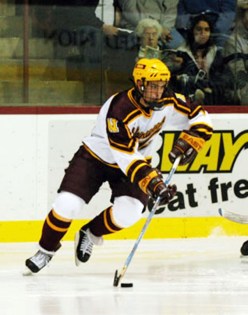
Second there is inversion and eversion or rolling of the ankle. Eversion is the rolling of the ankle that moves the bottom of the foot to point away from the center of the body and inversion is the rolling that creates the opposite. This is the movement of the ankle that allows a skater to “grab” the ice. Think of it this way; if you were on skates and pointed your feet straight ahead and then did a kind of walking motion where each foot moved straight from front to back, then you wouldn’t go anywhere. There would be no “grab” of the ice.  You need to grab the ice by rolling the ankle to apply  bite and grip into the ice to get the most out of your skating stride.

It’s the combination of these actions of the ankle that is critical to being a great skater and a successful hockey player.

So Here’s The Important Point

While both disciplines involve the wearing of skates and skating, the end goals and therefore the process to achieve those goals is different.

Once again, a big part of figure skating is a show with pleasing body lines and form as well as spectacular jumps. Therefor the boot is laced high for support and naturally restricts the movement of the ankle that is so important in hockey. I’m not saying it’s impossible for a trained figure skater to learn about how the ankle must move to be a great skater for hockey; I’m just don’t think they would get this from their training for figure skating. Also there is the fact that just knowing about something doesn’t mean you know how to teach it, but that’s a whole other topic to be cover later.

Time now to end this part for now (this became a little linger than expected).

I’d love to hear from some figure skaters that train hockey players and I’m always open to learn something new.

Can Figure Skaters Really Teach Hockey Players?

Note:

If you’re new to this blog and reading it from Facebook or Twitter, make sure to click on the BLOG/NEWS link in the menu at the top of the page and scroll down to read previous blogs on this and other subjects. Otherwise you won’t be able to get to previous blogs.
 

Share this:

  • Click to share on X (Opens in new window) X
  • Click to share on Facebook (Opens in new window) Facebook
  • Click to share on Pinterest (Opens in new window) Pinterest
  • Click to share on LinkedIn (Opens in new window) LinkedIn
Like Loading...

Can Figure Skaters Teach Hockey Players? – Part 2 – (XXIII)

Posted by Jim on August 22, 2018
Posted in: Druzhba 78, Hockey, hockey Skills, how to succeed in hockey, Jim Serba, mike serba, mike serba memorial golf tournament, Russian hockey skills, understanding hockey.

Can Figure Skaters Really Teach Hockey Players?

Continued

In the first part of this series, I wondered about the ability of a person trained as a figure skater to teach a hockey player all of the elements necessary to be a great skater for hockey.

Now this has been going on for quite a while. There have been many (mostly female) figure skaters that run hockey schools and  been hired by NHL teams and individual NHL players for skating instruction.

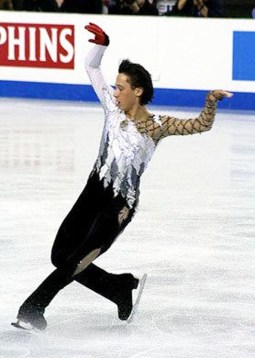
For certain, there are cross-over elements for these skating techniques; however I believe there are significant differences as well and there are specific reasons for these differences. The reason for the differences quite simply are a result of the end objective. In figure skating, the objective for the skater is to put on a great show in order to win a medal and win the competition. The movements must be pleasing to the eye, graceful and look effortless. This means that the “body lines” created during the performance are of tremendous importance. There are other elements of differences in these techniques and I will deal with those in the future, but for now this is the point I want to illustrate.
A Personal Experience That I Always Remember

Back when I was actively working for a hockey school here in Toronto, there was a player that I worked with during weekly team skills sessions. His name is Jimmie Lodge and he was born in Pennsylvania, but his family aspired for Jimmy to have a career in hockey and hopefully in the NHL. Believing that the best experience and development for Jimmy was to play in the GTHL; the biggest and most competitive minor hockey league in the world. Now Jimmy had initially started as a figure skater in his very early youth and the habits developed during that training were still evident when I watched him during our weekly team sessions.

I found one habit quite amusing. One thing we did a lot of was drills requiring quite hard and fast transitions and change of direction; something that is not normally a requirement in figure skating. So lets see if I can describe the difference adequately.  In hockey if you are going to completely change direction quickly (in other words if you’re skating south to north and you want to stop as quickly as possible, change direction and go north to south) you would start with a typical 2 footed hockey stop. Say in doing this the stop is to the left side. In this 2 footed skating stop the skater would be using the outside edge on the left skate and the inside edge on the right skate. Just before coming to a complete stop the skater would lift the right foot and turn his body to the new direction. As the stop is completed the skater would push-off the outside edge of the left skate as the right foot hits the ice and be moving in the new direction as quickly and efficiently as possible. Now writing about this move and thinking about conveying it has been painful, but I hope I got it right.

Now good old Jimmy; because of his old figure skating habits would just use the outside edge of his left skate which is the way figure skaters frequently stop in the need for a showy presentation. I was certain Jimmy was always just a split second slower in these transitions because of this habit.

One More Example 

I had occasion to be at a Toronto Maple Leafs a few years ago and there was a new feature that I hadn’t seen before. During a time-out break for a TV commercial they had a team of girls come out to clean the scraped up snow from the ice. I was amused at the obvious difference in the skating style of the girls. Some had clearly played hockey and others came from a figure skating back ground and the difference in style was obvious.

Watch the following film clip and I’m sure you’ll see the differences. It’s most clear at the beginning. Watch the row of girls closest to the camera and watch the first girl in the line. She skates like a hockey player. Notice the bend of the knee, the tilt of the upper body, the push to the side in the stride and the pretty clear weight shift form side to side. Now watch the 3rd girl in that line. Notice that she is more upright with less knee bend, less tilt of the upper body, more of a push to the rear to start each stride, and the straight point of the of the leg after finishing a stride to create a pleasing body line for show. This one is obviously a figure skater.

In Part 3 I’ll outline some of the cross-over similarities between figure skating and skating for hockey as well as some of the differences.

Note:

If you’re new to this blog and reading it from Facebook or Twitter, make sure to click on the BLOG/NEWS link in the menu at the top of the page and scroll down to read previous blogs on this and other subjects. Otherwise you won’t be able to get to previous blogs.


Share this:

  • Click to share on X (Opens in new window) X
  • Click to share on Facebook (Opens in new window) Facebook
  • Click to share on Pinterest (Opens in new window) Pinterest
  • Click to share on LinkedIn (Opens in new window) LinkedIn
Like Loading...

Can Figure Skaters Teach Hockey Players? – Part 1 – (XXII)

Posted by Jim on August 17, 2018
Posted in: Hockey, hockey Skills, how to succeed in hockey, Jim Serba, mike serba, mike serba memorial golf tournament, Russian hockey skills, understanding hockey.

Can Figure Skaters Really Teach Hockey Players?

The obvious answer is that I they can, but I think, for the most part there are severe limitations and I have to question relying on a figure skater for all of your skating instruction. Can they help a hockey player with skating? ….. yes. Will they hurt a hockey player’s skating? ….. probably not. Are they limited as to what they can teach a hockey player about skating for hockey? ….. absolutely is my belief.

I’ve been thinking about writing on this topic for a while and considered my approach for some time, but this is a topic that has to covered. First, the difficulties are to clearly make the distinctions in the physical movements involved in skating in written form. (That’s why golf instruction books are mostly useless. Trying to describe body movements and how they feel and communicate that so that the reader totally gets it is extremely difficult.)

Why I’m Writing This Now

I recently read some newspaper articles about a lady named Dawn Braid, Braid was hired earlier this summer by  the Arizona Coyotes, making her the NHL’s first full-time female coach.

God bless her and I wish her and the Coyotes all of the best; and I mean that sincerely.

I would love to talk to her some time and have a serious discussion about the details of skating technique for hockey skaters and her background and overall experience. I would love to know if she thinks there were any significant differences between the skating techniques for figure skating and skating for hockey. Also, if she did in fact feel there were differences; how did she gain the expertise to instruct in this area. I’m always open to ideas and to expanding my knowledge.

In the article it mentions her having worked with John Tavares and there is some great words of endorsement quoted from John who she worked with from the age of seventeen. The article also quotes the following: “Dallas centre Jason Spezza and New Jersey left wing Mike Cammalleri are among her other disciples …..”.

Now I will tell you something; and that is that Tavares’ skating has improved a lot, but that has only come in the last couple of years. Therefor, if she’s been working with him since he was seventeen, then for some reason there was a big delayed reaction to his improvement.

If you’re sensing some skepticism, your right. Because while Jason Spezza is mentioned as a disciple of Braid, I happened to know who has worked with Spezza consistently on an ongoing basis since the age of ten and still works with him to this day. In fact I know that Spezza has flown this instructor in and rented private ice to get mid-season instruction. It’s hard to believe the claim that Spezza is a “disciple” of Braid. I think this is just some fluff that looks good for the article. Oh!, and by the way, I know that recently Tavares (just in the last couple of years) has had instruction from Spezza’s guy.

Lets Get Something Out Of The Way Right Away

I’ve never seen a figure skater do a routine of any kind with a stick and a puck; let alone a routine that involved stick handling, getting a pass, giving a pass or shooting a puck. Now if you could image a figure skating routine with all of these elements, would they have to do it with some other skaters on the ice trying to hit them and take their heads off? Good luck!

So if you ever go to a figure skater for instruction and they try to give a lot detailed instruction about working with a stick and a puck; you might want to seriously question their credentials. Where in heaven’s name would they have gotten any background into these skills to make them an expert?

 What Figure Skaters Can Teach You?

The Common Elements

Just to let you know that when I was younger, I went to some female figure skating friends for instruction to try to become a better skater and it was a help. This was at time way before there was any kind of skating instruction for hockey players.

In Part 2, I’ll deal with what they can they teach you because there are some common elements to both figure skating and skating for hockey. I’ll also deal with the differences between figure skating; which is really to put on a show, and why there are elements they probably can’t teach you and why.

Note:

If you’re new to this blog and reading it from Facebook or Twitter, make sure to click on the BLOG/NEWS link in the menu at the top of the page and scroll down to read previous blogs on this and other subjects.


Share this:

  • Click to share on X (Opens in new window) X
  • Click to share on Facebook (Opens in new window) Facebook
  • Click to share on Pinterest (Opens in new window) Pinterest
  • Click to share on LinkedIn (Opens in new window) LinkedIn
Like Loading...

Druzhba 78 – Follow-Up – The Surprise – (XXI)

Posted by Jim on August 9, 2018
Posted in: Anitoliy Buliga, Druzhba 78, Hockey, hockey Skills, how to succeed in hockey, Jim Serba, mike serba, mike serba memorial golf tournament, Russian hockey skills, understanding hockey.

Druzhba 78 Surprise Ending

To Set The Stage

While planning to write the initial blog about the Druzhba 78 team, I was recollecting the experience of watching the team play. What I saw was do different and so amazing that there are certain memories and images seared into my brain.

The bench management was highly unusual to say the least. The lone coach, Ivan Pavilov, for the most part stood in the middle behind the bench although occasionally he would move to the end where players were coming off the ice to give a player crap for something. All of the players leaving the ice after a shift come onto the bench from the defense side and it was the spare goalie that opened the bench gate for them. All players going on to the ice left the bench from the offense side gate and the first player would open the bench gate.

The team frequently changed on the fly not just waiting for a stoppage in play. When changing on the fly players leaving the ice were skating so hard to the bench that by the end of the period snow was piled high up the boards at the defense side of the bench from their hard stops (by the way, this is not an exaggeration). From time to time just one player would leave the ice and change on the fly and this would happen at what seemed like odd times. In one instance I saw a player change in the middle of a power play in the middle of a prolonged time of control of the puck in the other teams end. I could never figure out why that change was made.

There was a lot more that is seared into my brain; mainly their amazing stick handling and puck control. There was also the typical “Russian” puck control style of game. They were like the Harlem Globetrotters of hockey. They just never gave up the puck.

One More Thing That Amazed Me

And Then The Surprise

The size of the players on the Druzhba team was all over the place; although they were all the same age, they ranged from very tall to very small.

There was one diminutive player by the name of Anatoliy Buliga that was just amazing with his skating and puck handling skills. On an offensive play, he could go into the corner with the puck and have 2 or 3 of the opposition try to take the puck away against the boards and yet somehow he would come out of the corner with the puck. He was given the nickname Anatoliy “The Magician”.

As written in a previous blog, the Richmond Hill – Vaughan hockey association arranged for an exhibition game with Druzhba 78. Now this exhibition game was played against a put together all-star team of players from Richmond Hill – Vaughan and their players were at least a year older than the Druzhba team. Also, the Druzhba team was in the middle of a tournament and had played earlier in the day. It was at the exhibition game that my sons were in awe and inspired by the skill of Anatoliy Buliga. The hockey association was selling memorabilia to raise money. We bought a hockey puck signed by Buliga and I still have the puck to this day.

The Surprise

In prepping for the initial blog, I used the ‘Google Machine” to check the spelling of Buliga’s name. God bless the “Google Machine” because I came up with a number of links to sites for Anatoliy. It looked like he was still involved in hockey and was operating as a skills instructor. I found sites linked to hockey instruction in Europe however there were sites that were linked to hockey training near Detroit Michigan. The thought struck me right away that it would be great to talk to him and maybe get a chance to meet him. I tried calling phone numbers on some of the sites but they were no longer active.
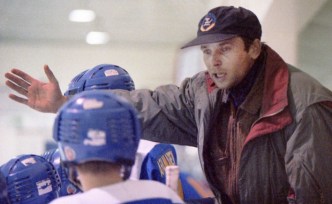
Some of the site had links to Facebook pages so I looked them up and sent messages to the pages. Surprisingly I received a response from one of the pages. After a bit of writing back and forth as to what my request was all about, I was advised that the he had been in contact with Anatoliy and I was given his cell number and told I could reach out to him any time.

Well, I really couldn’t wait so I called right away and Anatoliy answered. He was in some swimming pool area where his son was training as a competitive swimmer. We spoke for quite a while and he said he was coaching with the Detroit Little Caesar’s  hockey organization. He said in all likelihood the team he coached would be entering a tournament in Ontario in August or September as a warm-up for their upcoming season. He said he didn’t know the schedule or where the would play yet but he would let me know so the we could get together.

I can’t wait.

Stay tuned for more ……

Note:

If you’re new to this blog and reading it from Facebook or Twitter, make sure to click on the BLOG/NEWS link in the menu at the top of the page and scroll down to read previous blogs on this and other subjects.

Share this:

  • Click to share on X (Opens in new window) X
  • Click to share on Facebook (Opens in new window) Facebook
  • Click to share on Pinterest (Opens in new window) Pinterest
  • Click to share on LinkedIn (Opens in new window) LinkedIn
Like Loading...

Can Hockey Skills Be Taught – Druzhba 78 Update – (XX)

Posted by Jim on August 3, 2018
Posted in: 1972 Canada Russia Hockey Series, Anitoliy Buliga, Druzhba 78, Hockey, hockey Skills, how to succeed in hockey, Jim Serba, mike serba, mike serba memorial golf tournament, Russian hockey skills, understanding hockey.

Follow Up On Last Blog

Druzhba 78

And A Surprise Ending

In my last blog I wrote about the singular amazing experience that had a profound impact on me and gave me proof that hockey skills (just like any skill really) can be taught.

That event was watching the Druzhba 78 team play several games in the Toronto area back in 1992.

I know  I wasn’t the only person that was in awe and affected by watching Druzhba 78 play. Quite a few people were so impressed that they organized and paid for the team to play on exhibition tours across North America. For me, I saw the possibilities for skills development for my 2 hockey playing sons. At that time I was a typical father with hopes and dreams for my boys.

Now there are a couple of reasons for this follow-up. First; just to once again emphasize, this experience was definitive proof of the possibilities of teaching and learning.  I was convinced of it then and my view has not changed. Second, there is a serious back-story that you should know about regarding the Druzhba 78 team.

The Back-Story Of Druzhba 78

At the Quebec international peewee hockey tournament in 1992, the Druzhba team from Kharkov Ukraine was a phenomena. They were so dominant in their play that everyone took notice.

They came to the Quebec tourney with hockey equipment that was worn out and older than the boys were in age. The people of Quebec in a way adopted them and donations of money, new hockey equipment and gifts poured in to the team. In true “fairy tale” fashion the team went on to win the hockey tournament. As I wrote in my previous blog, there were people who were so impressed that they made the arrangements to bring them to Toronto and that’s where I saw the team play.

But there were early hints of problems. The team’s coach, Ivan Pravilov, started to ask for donations of more money stating the team was in debt and needed funds to get though. Local Quebec residents became suspicious. The Ukrainian National Congress (who at first was so proud so the team and assisted them) checked back with the people in Kharkov and were told that the City and local government had funded the trip to Quebec.

But There’s A Lot More

Word eventually came out that the coaching and training methods of Ivan Pravilov were not particularly “enlightened”. Carefully hidden from public view was the abusive methods of Pravilov.
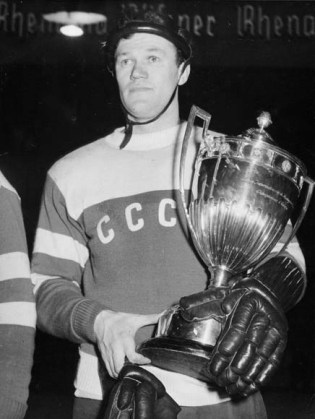
Word later came out of the extreme physical and mental abuse by Pravilov to his players to get results.

The players never spoke of the abuse until  years later when they had escaped from Pravilov’s influence and were then living as young men in the United States pursuing a career in hockey.

In January 2012, (by this time Pravilov was making a living off of the reputation of the Druzhba team and travelling extensively on exhibition tours) Ivan Pravilov was accused of fondling two 14-year-old Ukrainian players who he had invited to his home in the Philadelphia. He was taken into custody and placed in a Federal Detention Center but was found later to be unresponsive and was pronounced dead at the hospital. Evidence suggested was that he had committed suicide and this was confirmed by the city medical examiner’s office.

A tragic revelation and ending to what appeared to be a great fairy tale story.

However there is another “real” surprise ending to my story of Druzhba 78. You’ll find out in my next blog.

You’ll Have to Wait For An Amazing Surprise Ending

Note:

If you’re new to this blog and reading it from Facebook or Twitter, make sure to click on the BLOG/NEWS link in the menu at the top of the page and scroll down to read previous blogs on this and other subjects.


Share this:

  • Click to share on X (Opens in new window) X
  • Click to share on Facebook (Opens in new window) Facebook
  • Click to share on Pinterest (Opens in new window) Pinterest
  • Click to share on LinkedIn (Opens in new window) LinkedIn
Like Loading...

The Truth About Hockey Continued (XIX) – Can Hockey Skills Be Taught – Druzhba 78

Posted by Jim on July 25, 2018
Posted in: 1972 Canada Russia Hockey Series, Anitoliy Buliga, Druzhba 78, Hockey, hockey Skills, how to succeed in hockey, Humboldt tragedy, Jim Serba, mike serba, mike serba memorial golf tournament, Russian hockey skills, understanding hockey.

Can Hockey Skills Be Taught – Continued

This Is All The Proof I Needed


Some Background

In February of 1992 my 2 sons, Andrew & Michael, were into playing hockey. At that time Andrew had just turned 13 years old and Michael was 11 years old. For myself I was very much into all levels of hockey, but still very much into minor hockey and coaching in the Toronto area.

I got wind of a team that had just recently won the prestigious Quebec International Peewee Hockey Tournament. They were known as Druzhba from the city of Kharkov in Ukraine. The Quebec Tournament started in 1960 and quickly grew in stature to be one of the most respected and prominent hockey tournaments world-wide. Triple A hockey teams from Toronto would plan and do their best to get into the tournament as there were only a few entries available from the Toronto area.

Some Background On Druzhba

In Ukrainian Druzhba means friendship. The team was from Kharkov located on the eastern border not far from Russia. In 1992 it was just 1 year since the fall of the iron curtain and the end of the Soviet Union. My understanding is that they were all students at the same school and that their hockey coach was also their soccer coach. Somehow they obtained entry into the Quebec International hockey tournament and were able to raise the funds to make the trip to Canada. I wasn’t in Quebec to watch any of the tournament, but my understanding is that they came with the most dilapidated used and worn out equipment. The people of Quebec City were so taken by the skills of the team that they arranged to buy and supply the team with new equipment.

The team was so dominant and spectacular that someone put together the money and paid to bring them to a Toronto tournament that was being held at the then named Double Rinks arena; now named The Vaughn Iceplex (which was at that time and still is today a real crap hole of a facility; but I digress). I watched them play in the tournament and couldn’t believe what I was seeing. At the same time while they were in the middle of the tournament someone arranged for the Druzhba team to play a Bantam all-star team of players for Vaughan. The results of the game against the Bantam Vaughan all-star team (these players were 2 years older) was the same; I couldn’t believe my eyes.

What I Witnessed

The players from the Druzba team covered the full range of sizes; from quite tall to quite small.

There was only one coach on the bench. On changes on the fly from the bench, the first player on the bench on the offence side of the bench opened the gate and any to follow whether a forward or a defense man  would be right behind. The spare goalie opened the gate on the defensive side and all players leaving the ice whether a forward or defense man came off the ice the defense side gate. The team more often that not changed on the fly and it could be at any time during any situation on the ice. I witnessed a kid peel off in the middle of a prolonged power play in the other team’s end and go back to the bench. This was almost unheard of in our Canadian hockey system and for the life of me I couldn’t figure out why the change was made at that time. The players leaving to go back to the bench when changing on the fly were skating so hard that at the end of the period the snow from their hard stops was piled up the boards.

In the play of the game Druzhba controlled the play. The skating, puck handling, passing and play making was almost magical. They played the typical Soviet style of hockey of absolute puck control and never giving away the puck. Amazingly they refused to shoot on goal in many instance where a a Canadian hockey player would be coached to shoot opting instead to make a play that ended in a tricky tip-in type goal from an unexpected series of passes that had all of the opposition out of position.

There was one diminutive player named Anatoliy Buliga; nicknamed Anatoliy “The Magician”. He could go into the corner with the puck and have up to 3 guys try to take it away from him and somehow come out of the corner with the puck.

This Was All I Needed As Proof

After watching Druzhba in about 4 games back in 1992, that was all the proof I needed that hockey skills could be taught. Eleven of the team members went on to a pro hockey career and Dainius Zubrus and  Andrei Zyuzin were first round NHL draft picks and went on to successful NHL careers. Not at all bad for one team of students from one school in Ukraine.

Can Hockey Skills Be Taught? – Yes They Can!


PostScript

There’s a lot more you need to know about the Druzhba 78 team. So this segment absolutely has to be extended. It will probably be in 3 parts and in the end there’s one hell-of-a surprise; something that I just found out about today.

Note:

If you’re new to this blog and reading it from Facebook or Twitter, make sure to click on the BLOG/NEWS link in the menu at the top of the page and scroll down to read previous blogs on this and other subjects.


Share this:

  • Click to share on X (Opens in new window) X
  • Click to share on Facebook (Opens in new window) Facebook
  • Click to share on Pinterest (Opens in new window) Pinterest
  • Click to share on LinkedIn (Opens in new window) LinkedIn
Like Loading...

The Truth About Hockey Continued (XVIII) – Can Hockey Skills Be Taught – Part 3D

Posted by Jim on July 19, 2018
Posted in: 1972 Canada Russia Hockey Series, Hockey, hockey Skills, how to succeed in hockey, Jim Serba, mike serba, mike serba memorial golf tournament, NHL Playofs, Russian hockey skills, understanding hockey.


The Greatest Day In Canadian Hockey 

Or Was It

A Setback For The Development Of Canadian Hockey?


In the 1970’s I had season tickets to the Toronto Maple Leafs and went to every home season and post season game at the famous Maple Leafs Gardens. During that time the Leafs met the Philadelphia Flyers, the famous “Broad Street Bullies”, a couple of years in a row during the play-offs. During that era, mostly what mattered in a hockey player was that you were big as hell and tough as hell and as long as you could shuffle along the ice; you were pretty much good to go. As with a lot of things, much of what happens at the NHL level, filters down to hockey at the lower levels.

Even into the nineties when my son Michael played triple A hockey in the then MTHL, it was still the case coaches were looking for size in recruiting players. There was one famous coach with the Toronto Marlies that went around recruiting in the arenas the biggest players from the other teams to come to his team for the next year. Now actively recruiting a player from another team during a season is known as tampering by the GTHL and not allowed but; a lot of coaches do it because they can’t really coach so, recruiting is their only option.

It was an absurd situation. These recruiting “so-called” hockey coaches hung around arenas talking to the parents of the biggest and toughest players in the league.  Their “shtick” went something like this: “your son is really a great hockey player and he would look good wearing a (take you pick; Marlie ,Red Wing, Young Nats,) jersey. I’ve got a solid base this year and a some really great players already committed to next year’s team. Your son is a great player and would fit right in; in fact I think he’s so good that he would be a key part of our success. I’ll make him an assistant captain or maybe even team captain. I’ll double shift him at center and he’ll be a key part of our power play. I’ve got a great program in place for next year and don’t forget; next year is a big year for scouts watching the team and with the ice time he gets, he’ll be assured him of a lot of exposure and it will be great for his draft prospects.” This was all just a complete load of F’n bull shit.

In my mind, here’s the tragic result of all the “BS” that was going on at that time. In a previous Blog I talked about all of the hockey schools that had opened up at that time. Now most of them really sucked in terms of true skills development, however, there were a few that were trying to give a good effort and a couple (a very few really) that were actually starting to get it right. The problem was (and personally I always thought this was tragic) that all of the naturally big kids and their parents were constantly being told that they were great. For the most part they were hearing the same “load” from more than just one so-called coach. The result was that none of these kids ever worked on their hockey skills. Why would they? They were being told they were already great and they believed it; and why wouldn’t they?


An Awful Thing That Happened To Canadian Hockey?

I remember being on a plane coming back home to Toronto as the first game of the 72 Canada Russia summit series started. Virtually every Canadian was extremely confident that the best Canadian hockey players in the NHL would demolish the best of the Russians. As we were leaving the plane the pilot announced the score was 2 nothing after the first 7 minutes into the game. Of course, a big cheer went up and hearing that confirmed our confidence the Russians would be toast.

By the time I got home to watch the end of the game; the Canadians had lost by a score of 7 to 3. In the following 3 games in Canada things didn’t exactly go Canada’s way. After losing game 4 in Vancouver, the team Canada was roundly booed by the Canadian home crowd.

Watch this video of Phil Esposito being interviewed after the game in Vancouver.

Canada went on to lose the 5th game which was the first game played in the Soviet Union. At that point the record was 3 wins for the Soviet team and only 1 win for Canada with 1 game played to a draw. Things were looking more bleak for Canada as the next 4 games would be played in the Soviet Union therefor having the disadvantage of playing on Russia’s turf and using their referees.

The Canadians lost game 5; the first game in Russia. And then, amazingly, the Canadians rallied to win the final 3 games in the Soviet Union. The final Game was a 6 to 5 win on the strength of Paul Henderson’s famous winning goal with just 36 seconds remaining in the period. The Canadians won the series by the slimmest of margins.

Henderson’s Goal Changed Everything

To this day Henderson’s last-minute winning goal is the single most remembered event of the series.

Instead of a devastating and crushing blow to the very core of Canadian identity, the country was actually reveling in what was seen simply as a win; that somehow became to be seen as a triumph and proof that Canadians were still the best hockey players in the world.

I always thought that we missed learning a valuable lesson. We failed to see the development by the Soviets when it came to their incredible individual skills of skating and stick handling and also their team skills of passing, puck control and play making. Ignoring what was right in front of your face and failing to recognize this set back hockey skills development in Canada for at least a decade.

A Setback For The Development Of Canadian Hockey?


Postscript 

Interesting Followup – Phil Esposito

Interesting Followup on the occasion of the 40th anniversary of the 72 Summit Series. Watch this to the end and you will probably come to understand why Canada came back and prevailed in the end; if only by the slimmest of margins. This video is really interesting in many ways.

 Post Postscript

I hope you don’t misunderstand my intentions. I have a great amount of respect for the players of that era and their skill level. It was a different time and a different game that was played in a different way. As a result of doing my research for this blog and watching the videos of Phil Esposito, I have to say I have a tremendous respect for him (as I do for all of the team Canada players) and actually I love the guy.

I think the game over all has changed a lot since that era and I think it’s changed for the better. I don’t think we’re all the way there yet, but we’re getting closer.

Note:

If you’re new to this blog and reading it from Facebook or Twitter, make sure to click on the BLOG/NEWS link in the menu at the top of the page and scroll down to read previous blogs on this and other subjects.

Share this:

  • Click to share on X (Opens in new window) X
  • Click to share on Facebook (Opens in new window) Facebook
  • Click to share on Pinterest (Opens in new window) Pinterest
  • Click to share on LinkedIn (Opens in new window) LinkedIn
Like Loading...

The Truth About Hockey Continued (XVII) – Can Hockey Skills Be Taught – Part 3C

Posted by Jim on July 13, 2018
Posted in: Hockey, hockey Skills, how to succeed in hockey, Jim Serba, mike serba, Russian hockey skills, Uncategorized, understanding hockey.

Can Hockey Skills Be Taught – Continued

As I wrote in the last Blog the success of Yasha Smuskin’s “Russian Skills” hockey spawned a new growth industry. Smuskin opened his school in Toronto in 1975. There was huge demand from parents to find a way to improve the skills of their children to give them an advantage. I was there during that time and watched new hockey schools spring up on a weekly basis. There are so many hockey training schools in the Toronto Area today; it’s truly amazing.

It’s generally accepted that Canadians invented the inception of the game that is recognized as ice hockey today. Probably as a result of our “frozen north” winter climate. The popularity of hockey took off and to this day it is one of the ways that Canadians define themselves. Since Canadians don’t have all that much to hang on to in order to define what we’re all about; I think we cling to hockey with a maniacal fervor for fear of losing an important part of our identity.

For decades Canadians were dominant in hockey and considered the best in the world. In the early days Canadian teams could not be beaten. I believe also that you have to understand early origins of life in Canada. Canada had fishing on the east and west coasts, mining in Ontario, Quebec and Manitoba. Forestry in Quebec, Ontario and British Columbia and farming in the prairie provinces as well as southern Ontario and Quebec. These are tough lifestyles where only the strong survive and without determination and a strong will; you just won’t make it. Now take young men with a background rooted in these lifestyles and with a bit of hockey skill; good luck trying to beat them.

For the vast majority of the history of hockey in Canada there was no such thing as technical skills development. It was just the natural process of the cream rising to the top. Developing hockey skills was just by osmosis and as in any competitive endeavor; some will develop and progress while those that cannot fall by the wayside.

Remember also; as I wrote in a previous blog about hockey in Canada, from the highest professional levels of the game to the rudimentary house league level, the emphasis has never really been on the creation of excellence with the specific goal of developing the best hockey players as well as the best hockey coaches, but more about personal selfish goals of the people in control.

So Who Was Initially Responsible For Technical Hockey Skills Development?

My View

Well it was the Soviet Union. After World War Two; while Canadians still were dominating winning in the hockey world and those in control were lining their pockets, the Soviet began to look for a way to prove the superiority of their political / economic system. This, by the way, was not a novel idea. Just think about Hitler and Germany in the 1936 Munich Olympics.

The Way I See It

Not long after the end of World War II, the “Cold War” era began between the western democratic countries and the new Soviet Union. In that struggle to secure greater world dominance and influence the Soviet Union initiated a specific plan to show the world the “superiority” of their system by winning at the Olympics.

To accomplish this their focus was singular on winning gold medals. With that goal in mind they set out to do what ever it took to develop the most highly skilled hockey players as well as the most highly skilled trainers and coaches. They even included a comprehensive sports program into their school system with significant time and coaching resources devoted to this program. They went to the extent to have so-called experts  put young students though a series of physical exercises and based on the evaluation of their performance the students were streamed into specific sporting activities in order that the students would be trained in those activities in which they could experience the best results.

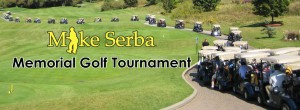
In those days, participation in the Olympics were open to “amateur” athletes only.  To get around this Soviet hockey players were interestingly somehow all in the army. This made them professional soldiers but still amateur hockey players. This resulted in considerable success for the Soviet hockey team with the following results starting from 1956 through to 2002 during which time there were 10 winter Olympics held: 5 gold medals, 2 silver medals and 2 bronze medals. Now remember that the winter Olympics are held every 4 years so this is a very dominant and impressive record. Professional hockey players were not fully allow to participate in Olympic hockey until 1988. Since that time Russia has won only 1 silver medal and 1 bronze medal.

So it was the former Soviet Union (Russians) that pioneered the development of the science and art of the specific body movements and skills related to skating and handling a puck while skating and the training methods to produce the best hockey players. The goal was very specific; to win at the Olympics. Also, with that in mind they there’s now question they worked to develop the best hockey coaches and strategies of the play of the game.

Meanwhile in Canada and The United States the goal was the fulfillment of the personal goals of those in power which for the most part was the making of money.

Yes – Hockey Skills Can Be Taught

And

The Soviets Led The Way

Note:

If you’re new to this blog and reading it from Facebook or Twitter, make sure to click on the BLOG/NEWS link in the menu at the top of the page and scroll down to read previous blogs on this and other subjects.

Share this:

  • Click to share on X (Opens in new window) X
  • Click to share on Facebook (Opens in new window) Facebook
  • Click to share on Pinterest (Opens in new window) Pinterest
  • Click to share on LinkedIn (Opens in new window) LinkedIn
Like Loading...

The Truth About Hockey Continued (XVI) – Can Hockey Skills Be Taught – Part 3B

Posted by Jim on July 5, 2018
Posted in: Hockey, hockey Skills, how to succeed in hockey, Jim Serba, mike serba, mike serba memorial golf tournament, Russian hockey skills, understanding hockey.

The Answer Is Obvious

Of Course Hockey Skills Can Be Taught

While the teaching and instruction of many other disciplines has been has been around; evolved and refined over the course of hundreds of years, the instruction and teaching of hockey skills is quite new. It really wasn’t taken seriously until the late 1960’s or early 1970’s.

First – Some History

When it comes to skating; there is evidence of gliding on ice dating back several thousand years, although true ice skating didn’t happen until advent of steel edges being used sometime in the 1300’s. The first recorded skating club; located in Edinburgh, Scotland, dates from about 1750 and was was some form of figure skating. When it comes to laying claim to being the “first” in anything, many like to make that claim. It’s probably accurate that The McGill University Club; recorded as founded in 1877, followed by The Quebec Hockey Club in 1778 and The Montreal Victorias in 1881, represent the birth of some form of organized ice hockey as we know it today.

I’m not certain when the first actual technical hockey skills instruction (beyond just a coach working his team) started, but as far as I’m aware the first in my area would have to be the so-called Dr. Yasha Smuskin. Smuskin who was an Olympic figure skating coach in the Soviet Union and immigrated first to the United States and then quickly came to Canada in 1975 when he established his “hockey school”.

 Cometh The Hour – Cometh The Man

Smuskin?

Prior to Yasha Smuskin’s arrival in Toronto, “real” hockey skills training was virtually non existent.

Dr. Yasha Smuskin was a character with a “personality”. He was in the right place at the right time (when parents had heard a bit of news about Russian hockey skills development) and were looking for something new. He was astute enough to exploit the opportunity and maximize (from a marketing point of view) his assets. He yelled at the students mostly playing to his audience of the parents who payed the the freight. He utilized his Russian accent and would wildly swing his hockey stick in the air when berating the students to the amusement of the parents. He used props like like spring boards over which the students would skate and jump and “carousels” to aid in crossover skating (which I believe actually helped in that particular skating element).

He was new and he was the man of the hour filling a huge pent up demand for development of hockey skills that parents were craving for to help further their hockey dreams for their hockey playing children. Word spread quickly and and the Smuskin hockey school grow at a phenomenal rate and had a good long run

A New Growth Industry Is Born

The success of Yasha Smuskin was noticed in the greater Toronto area and spawned a new growth industry of hockey schools. A whole pile of people jumped in to start a hockey school and this continues to the present day. There is no end to people willing to start any sort of hockey training facility and there is seemingly no end to the willingness of parents to pay for training that might give their hockey playing children an advantage to help their progress.

The Problem With Smuskin – (And His Ilk) – As I see It

Smuskin was and is a figure skater. I have never seen a figure skater do a routine with a hockey stick while handling a hockey puck. That would be something to behold in itself; however, how about doing all of that with someone (actually a number of people) on the ice not just getting in your way, but also trying to hit you and perfectly willing to take your head off in the process.

Early on, I sought out the help of some figure skating girls to become a better skater. They taught me basic figure skating edges drills (semicircles on inside edges going forward and backwards and transitions from one to the other) and this was definitely a help. For the most part edging and proper body position while doing edges is the same for both figure skating and hockey are the same. However as I said, in hockey your handling a puck and you better learn to keep your head up because there is are opponents ready to take your head off.

In addition to skating with a stuck while handling a puck, There are also some really huge differences in the demands to achieve top level performance in hockey and therefor quite different techniques are necessary for application of power to the ice in order to be successful. The demands for successful performance are different in figure skating and therefor figure skating has some very big differences.

The Answer Is Obvious

Some History 

And  More History To Follow

As I write about this topic I realize that it’s more substantial than I initially thought. I need to write more and continue with the history of the development of hockey schools and hockey specific skills training. We need to understand where we are; and part of that understanding requires the need to know how we got here.

Note:

If you’re new to this blog and reading it from Facebook or Twitter, make sure to click on the BLOG/NEWS link in the menu at the top of the page and scroll down to read previous blogs on this and other subjects.

Share this:

  • Click to share on X (Opens in new window) X
  • Click to share on Facebook (Opens in new window) Facebook
  • Click to share on Pinterest (Opens in new window) Pinterest
  • Click to share on LinkedIn (Opens in new window) LinkedIn
Like Loading...

NHL Playoffs – Vegas Versus Washington

Posted by Jim on May 28, 2018
Posted in: Hockey, hockey Skills, how to succeed in hockey, Jim Serba, mike serba, mike serba memorial golf tournament, NHL Playofs, Russian hockey skills, understanding hockey.

NHL Playoffs – Vegas Versus Washington


Just A Quick Commentary About The NHL Playoffs Starting Later Tonight Between The Washington Capitals And The Las Vegas Knights.


I don’t really watch all that much hockey any more. If you’ve read any of my blogs you’ll know that a big part of my life has revolved around hockey. I worked with a fair number of NHL players and I’ll follow their games and I’ll watch the “Mem” Cup because of the great hockey being played; but other that the way hockey was being played had turned me off. Having said that, I’ve actually become interested again. The play of the game has changed to where it’s actually compelling to watch and keeps your interest. The Leafs look like they’ve made forward progress and this Stanley Cup final this year is one hell-of-story.

I don’t have any skin in the game one way or the other and I have no particular preference as to the outcome, but I’m actually exited and the game tonight and all the way to the finish is a “must watch” event.

Ovechkin for Washington has been a been a determined beast of player but can he keep it up? Fleury for Las Vegas  has been a rock but can he keep it up?

I Just Wonder

I had a conversation with some friends quite some time ago about the unexpected first year expansion franchise success of Las Vegas. No expansion team in the history of the NHL has experienced this kind of success. Most wallow at the bottom for a number of years before achieving any success. Now the NHL with salary caps and such has undergone some changes, but LA’s success is historically unprecedented.

Just Imagine

I mused about this entire situation and speculated on the following scene being played out.

All of the guys drafted by the Knights get together over a beer and someone says something like the following;

“Guys we’ve all essentially been cast aside by our teams and they have made the decision that we are expendable and likely of marginal value going forward. We can all sit here and cry in our beer or we can show them otherwise and stick it up their collective asses”.

Never underestimate a team that will set their individual egos aside, commit to accept their necessary role toward the achievement of a common goal and commit to give it their absolute unselfish dedication and  maximum effort.

I Just Wonder

I promise I’ll get back to my usual blogs about hockey soon ….. I just couldn’t resist.

Note:

If you’re new to this blog and reading it from Facebook or Twitter, make sure to click on the BLOG/NEWS link in the menu at the top of the page and scroll down to read previous blogs on this and other subjects.


Share this:

  • Click to share on X (Opens in new window) X
  • Click to share on Facebook (Opens in new window) Facebook
  • Click to share on Pinterest (Opens in new window) Pinterest
  • Click to share on LinkedIn (Opens in new window) LinkedIn
Like Loading...

Posts navigation

← Older Entries
Newer Entries →
  • Contacts

    To contact me, just phone or click on my name below to send an email.

    Jim Serba - 416-895-4468
  • Join Our Facebook Group


    I Miss Mike - Remembering Mike Serba
  • Follow Us on Twitter

    My Tweets
  • Like Us on Facebook

    Like Us on Facebook
  • COPYRIGHT NOTICE: This website and its content may not be copied, published, distributed, downloaded or otherwise stored in a retrieval system, transmitted or converted, in any form or by any means, electronic or otherwise, without the prior written permission of imissmike.com or Jim Serba

Blog at WordPress.com.
Mike Serba Memorial Golf Tournament
Blog at WordPress.com.
  • Subscribe Subscribed
    • Mike Serba Memorial Golf Tournament
    • Already have a WordPress.com account? Log in now.
    • Mike Serba Memorial Golf Tournament
    • Subscribe Subscribed
    • Sign up
    • Log in
    • Report this content
    • View site in Reader
    • Manage subscriptions
    • Collapse this bar
 

Loading Comments...
 

    %d